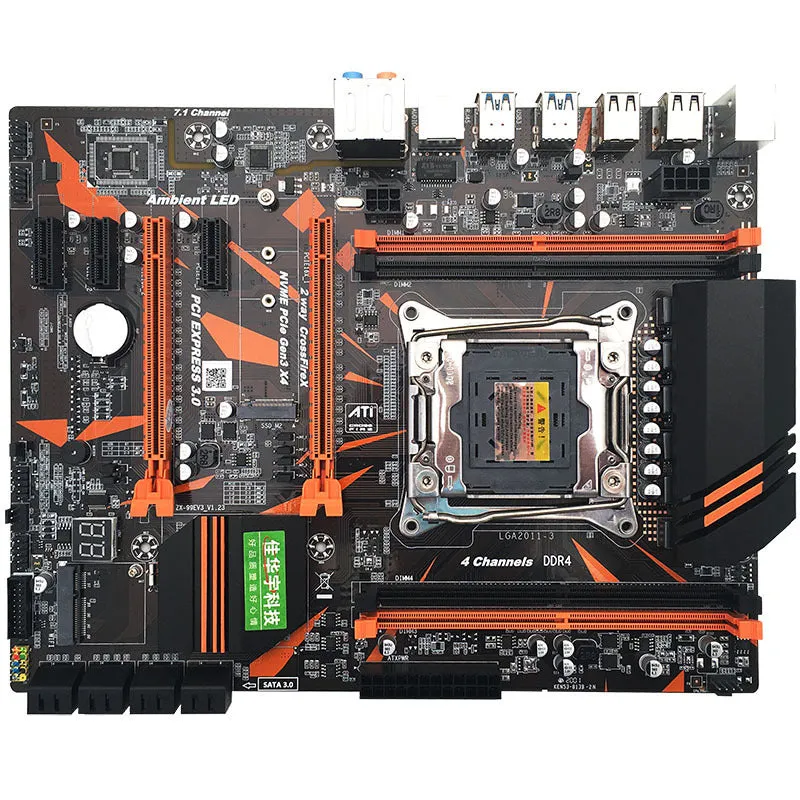
X99 ATX computer motherboard with LGA2011-3 socket supporting Intel 2011-v3 processors and quad-channel DDR4 memory with M.2 NVMe interface, RTL8111H Gigabit LAN and 7.1 channel audio in black


X99 ATX computer motherboard with LGA2011-3 socket supporting Intel 2011-v3 processors and quad-channel DDR4 memory with M.2 NVMe interface, RTL8111H Gigabit LAN and 7.1 channel audio in black
X99 Chipset Motherboard with LGA2011-3 Socket and Quad-Channel DDR4 Memory Support

This X99 series motherboard provides a robust foundation for high-performance computing systems, built around Intel's LGA2011-3 processor socket that accepts both Xeon E5 server CPUs and Core i7 desktop processors from the 2011-v3 platform. The ATX form factor board delivers professional-grade features including quad-channel DDR4 memory architecture, comprehensive expansion capabilities, and enterprise-level connectivity options. With support for up to 128GB of system memory and an M.2 NVMe interface for ultra-fast storage, this motherboard caters to demanding applications including content creation, engineering workstations, and enthusiast gaming rigs requiring substantial system resources.
Processor and Memory Specifications

The motherboard's central feature is its LGA2011-3 socket, designed specifically for Intel's 2011-v3 processor family. This includes Xeon E5 series server processors (such as E5-2600 v3/v4 series) and high-end desktop Core i7 CPUs including the 5820K and 5960X models. Memory configuration represents another key capability with four DDR4 DIMM slots arranged in quad-channel architecture for maximum bandwidth. The board accepts memory modules running at 2400MHz or 2333MHz speeds, with compatibility for both registered ECC memory typically used in server applications and standard desktop memory modules.
CPU Compatibility and Limitations
Processor support includes the entire Intel 2011-v3 socket family, though specific functionality varies between CPU types. Xeon E5 processors enable full use of REG ECC memory modules and are optimised for multi-threaded professional workloads. Core i7 processors provide strong single-threaded performance for gaming and creative applications but cannot utilise server-grade REG ECC memory modules simultaneously. The motherboard requires careful processor selection based on intended use case and memory configuration preferences, with BIOS updates potentially expanding compatibility to newer processor revisions within the same socket family.
Memory Configuration and Performance
Quad-channel memory architecture significantly increases available bandwidth compared to dual-channel configurations, particularly beneficial for memory-intensive applications like video editing, 3D rendering, and scientific simulations. Each of the four DIMM slots can accommodate modules up to 32GB capacity, enabling maximum system memory of 128GB. The board supports both unbuffered DIMMs (UDIMMs) for standard desktop use and registered DIMMs (RDIMMs) with ECC functionality for workstation applications. Memory speed operates at manufacturer-specified JEDEC standards of 2400MHz or 2333MHz depending on module capabilities and processor memory controller limitations.
Memory Population Guidelines
For optimal quad-channel performance, install memory modules in matching sets of four identical sticks across all DIMM slots. When using two modules, populate the appropriately coloured slots (typically alternating slots) to maintain dual-channel operation. Mixing different memory types, speeds, or capacities may reduce performance to single-channel operation or prevent system boot entirely. The motherboard's BIOS includes memory training routines that automatically configure timing parameters based on module SPD data, though manual adjustment is available for enthusiasts seeking maximum performance tuning.
Expansion and Connectivity Features

Expansion capabilities cater to both multi-GPU configurations and extensive storage arrays, with two PCI-E x16 slots operating at full bandwidth for graphics cards alongside three PCI-E x1 slots for additional expansion cards. Storage connectivity includes eight SATA 3.0 ports supporting 6Gbps transfer speeds for hard drives and SSDs, plus one M.2 socket operating in PCIe NVMe mode for next-generation solid-state drives. External connectivity provides both legacy and modern interfaces including PS/2 keyboard/mouse combination port, multiple USB 3.0 and USB 2.0 ports, Gigabit Ethernet, and 7.1 channel audio outputs.
Storage Configuration Options
The eight SATA 3.0 ports support traditional hard disk drives and SATA solid-state drives in various RAID configurations including 0, 1, 5, and 10 for performance or redundancy. The M.2 PCIe NVMe interface provides direct PCI Express connectivity for ultra-fast storage devices, bypassing SATA bandwidth limitations and reducing latency significantly. When using an M.2 NVMe drive, one SATA port may become unavailable depending on chipset lane allocation. Storage configuration offers flexibility for both capacity-oriented setups using multiple hard drives and performance-focused builds centred around NVMe storage.
Graphics and Expansion Capabilities
Two PCI-E x16 slots support dual graphics card configurations in either NVIDIA SLI or AMD CrossFire multi-GPU setups, with appropriate lane allocation determined by processor capabilities. The three PCI-E x1 slots accommodate additional expansion cards including sound cards, network adapters, USB expansion controllers, or specialised capture/encoding hardware. Slot placement considers both airflow and physical clearance, with sufficient spacing between primary PCI-E x16 slots to accommodate dual-slot graphics card coolers without obstruction.
Rear Panel Connectivity
The integrated I/O panel provides comprehensive connectivity including four USB 3.0 ports and two USB 2.0 ports for peripheral devices, PS/2 combination port for legacy keyboard/mouse compatibility, Gigabit Ethernet port powered by Realtek RTL8111H controller, and 7.1 channel audio outputs with separate microphone and line-in jacks. Additional internal headers support front-panel USB 3.0 and USB 2.0 connectivity, chassis fan connectors, and supplementary audio connections. The RTL8111H network controller includes advanced features like Wake-on-LAN and teaming support for network redundancy configurations.
System Features and Practical Considerations
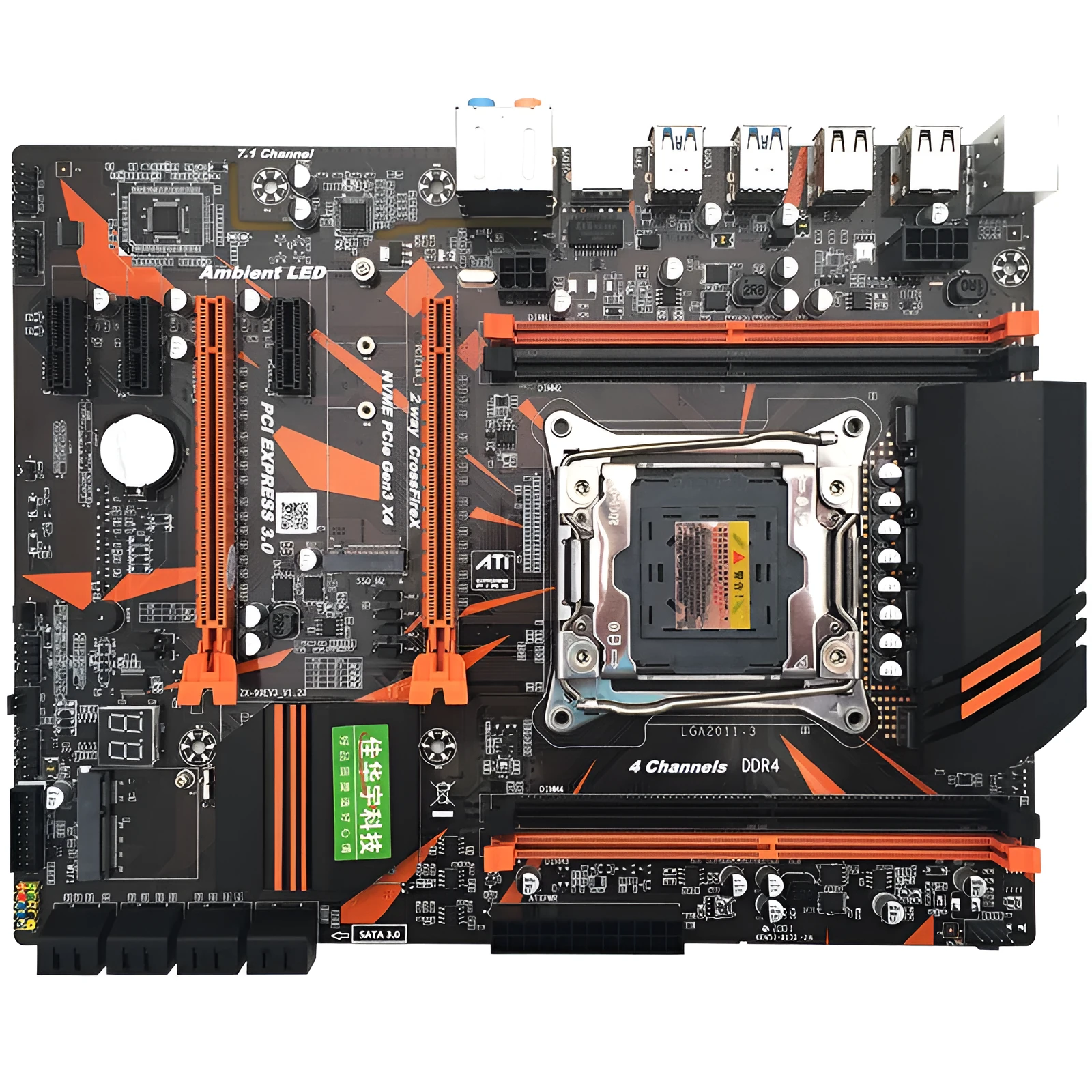
Power delivery employs a four-phase design with solid capacitors and aluminium heatsinks on voltage regulation modules, requiring both standard 24-pin ATX power connector and 8-pin EPS12V connector for processor power. System monitoring and diagnostics include a digital fault display with LED indicators showing post codes during boot process, supplemented by a piezoelectric buzzer for audible error reporting. Additional features include WiFi expansion capability through internal mini-PCIe slot, eight colour LED audio trace lighting, and comprehensive fan control headers with both voltage and PWM support for system cooling management.
Power Requirements and Delivery
The motherboard requires connection of both primary power connectors - the 24-pin ATX connector providing general board power and the 8-pin EPS12V connector dedicated to processor power delivery. Using only a 4-pin connector in the 8-pin socket may limit processor performance under heavy loads. Power phase design distributes load across multiple regulation stages for improved thermal performance and voltage stability, particularly important when overclocking high-core-count processors. System builders should select a power supply unit with sufficient amperage on the +12V rail to support processor and graphics card requirements simultaneously.
Diagnostic and Monitoring Tools
The digital fault diagnosis display provides two-digit hexadecimal codes during system startup, allowing precise identification of boot process stages and potential failure points. When combined with the system buzzer's audible beep codes, these tools significantly simplify troubleshooting of hardware incompatibilities, installation errors, or component failures. LED indicators show power status, storage activity, and network connectivity at a glance. These diagnostic features prove particularly valuable when building systems with non-standard components or when attempting performance tuning that may affect system stability.
Build Considerations and Compatibility
ATX form factor ensures compatibility with standard mid-tower and full-tower computer cases, though builders should verify clearance for large CPU coolers and graphics cards in specific chassis. Component selection should consider the motherboard's capabilities - high-core-count processors benefit from substantial cooling solutions, while multi-GPU configurations require adequate case airflow and power supply capacity. The black PCB colour may vary slightly between manufacturing batches as part of continuous product optimisation, though electrical specifications remain consistent. BIOS updates may expand compatibility with newer processors and memory modules within the same socket family.