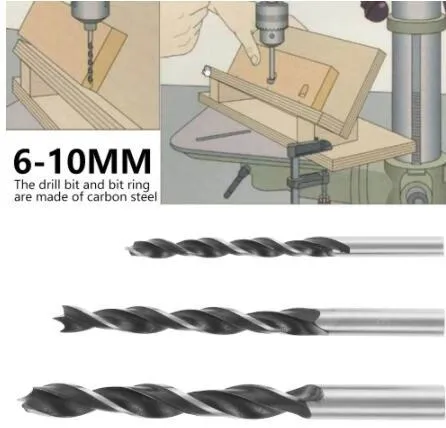
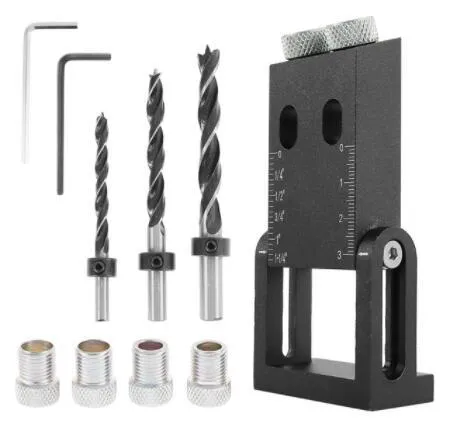
Woodworking perforation locator, aluminium alloy board connection installation tool with 5 drill bits 6-10mm and 15-degree angle sleeves, black professional wood joint dowelling jig for furniture cabinet making.


Woodworking perforation locator, aluminium alloy board connection installation tool with 5 drill bits 6-10mm and 15-degree angle sleeves, black professional wood joint dowelling jig for furniture cabinet making.
Aluminium Alloy Woodworking Perforation Locator for Precise Dowel Joints
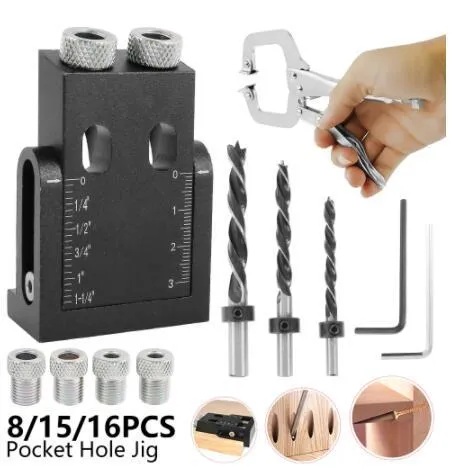
This woodworking perforation locator is a specialised tool designed to streamline the process of creating dowel joints in furniture making, cabinet construction, and general woodworking. It addresses the common challenge of accurately aligning and drilling holes for dowels, which is crucial for achieving strong, flush panel connections. By incorporating a preset angle and a range of sleeve guides, this aluminium alloy tool helps woodworkers, both professional and hobbyist, produce consistent results with greater efficiency and less room for measurement error, directly supporting projects that require reliable joinery.
Features and Construction
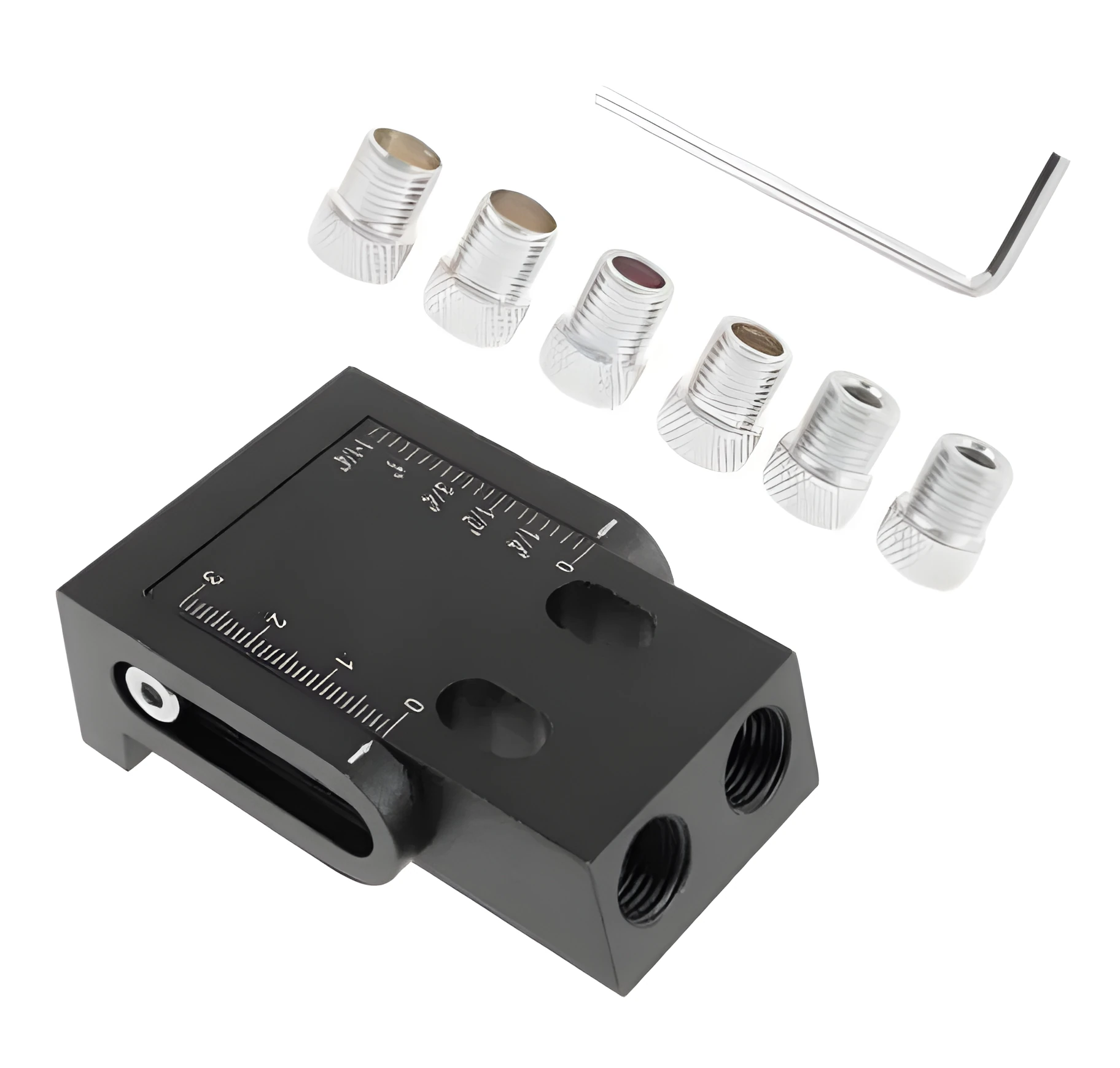
The tool's design centres on providing practical accuracy and durability for workshop use. Its construction and included components are chosen to handle the demands of drilling multiple dowel holes in various wood types.
Material and Build
The main body of the perforation locator is fabricated from aluminium alloy. This material choice results in a tool that is sufficiently rigid to maintain alignment under pressure during drilling, yet light enough for comfortable handling. The black finish provides a clean, professional appearance and helps protect the metal from superficial marks. The tool's build focuses on functional precision for its core task of guiding drill bits at a fixed angle.
Size and Practical Fit
The tool works with a supplied set of five high-speed steel drill bits, sized at 6mm, 7mm, 8mm, 9mm, and 10mm. This range covers the most common dowel diameters used in woodworking. Complementing these are three sleeves, sized for 6mm, 8mm, and 10mm holes, which act as bushings to centre and guide the drill bits accurately into the workpiece. The entire system is preset to a 15-degree angle, a common setting for creating strong, mechanical lock joints in cabinetry and frame assembly.
Uses and Placement
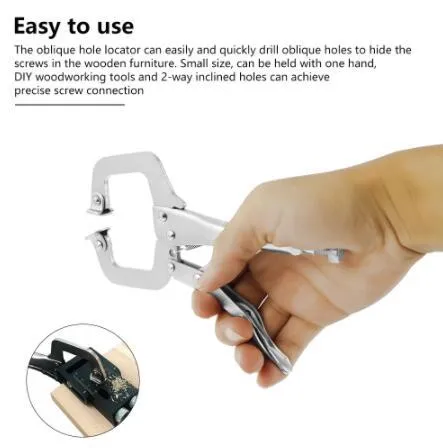
This locator is suited for tasks where precise hole alignment is non-negotiable. Its application spans from one-off DIY projects to more repetitive professional manufacturing work.
Event or Professional Use
In a professional cabinet shop or furniture workshop, this tool can increase throughput on batch production. The preset angle eliminates the need for individual set-up with protractors or angle gauges for every hole, ensuring every joint is identical. This consistency is vital for the seamless assembly of multiple units like kitchen carcasses, bookshelves, or table frames, where variance can lead to assembly issues and wasted materials.
Everyday Home Use
For the home woodworker or serious DIY enthusiast tackling projects like building a wardrobe, fitting out a shed, or constructing a garden bench, this tool brings a level of precision that might otherwise require more expensive, fixed machinery. It allows for the creation of strong, hidden dowel joints without needing a dedicated dowelling machine, making advanced joinery techniques more accessible in a home garage or shed workshop.
Benefits and Buying Value
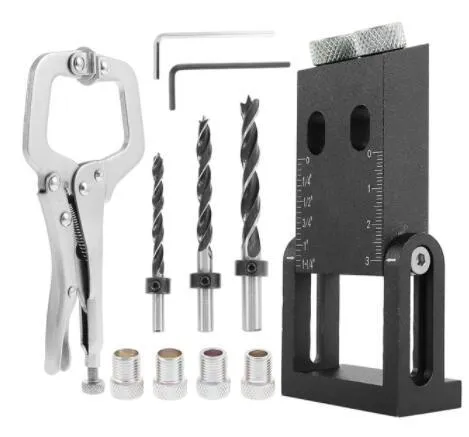
The value of this tool lies in its ability to improve accuracy and repeatability while being a dedicated, single-purpose aid that simplifies a complex task.
Reuse and Low Maintenance
As a metal tool with no moving electronic or complex mechanical parts, its longevity is tied to the care of the drill bits and general cleanliness. Keeping the sleeves free of sawdust and wood resin buildup will ensure continued accuracy. The drill bits, being standard high-speed steel, can be sharpened or replaced independently as they wear, extending the useful life of the entire kit. The aluminium body itself requires minimal maintenance beyond occasional wiping down.
Why Choose This Product
Choosing this perforation locator is a decision for those who prioritise precise results in dowel joinery. Its advantage over makeshift methods like careful marking and freehand drilling is the guaranteed repeatability of the 15-degree angle and the positive alignment provided by the metal sleeves. When compared to more generic drill guides, its specific design for wood panel connection with multiple bit sizes makes it a focused solution for a common woodworking problem, potentially reducing material waste from drilling errors.