
ESP-8266EX WIFI development board compatible with Arduino IDE, featuring 11 digital I/O pins, 1 analogue ADC pin with 0-3.3V input range, onboard 5V 1A switching power supply with maximum 24V input, and support for OTA wireless programming uploads


ESP-8266EX WIFI development board compatible with Arduino IDE, featuring 11 digital I/O pins, 1 analogue ADC pin with 0-3.3V input range, onboard 5V 1A switching power supply with maximum 24V input, and support for OTA wireless programming uploads
ESP-8266EX Arduino-Compatible WIFI Development Board with Onboard Power and OTA Support
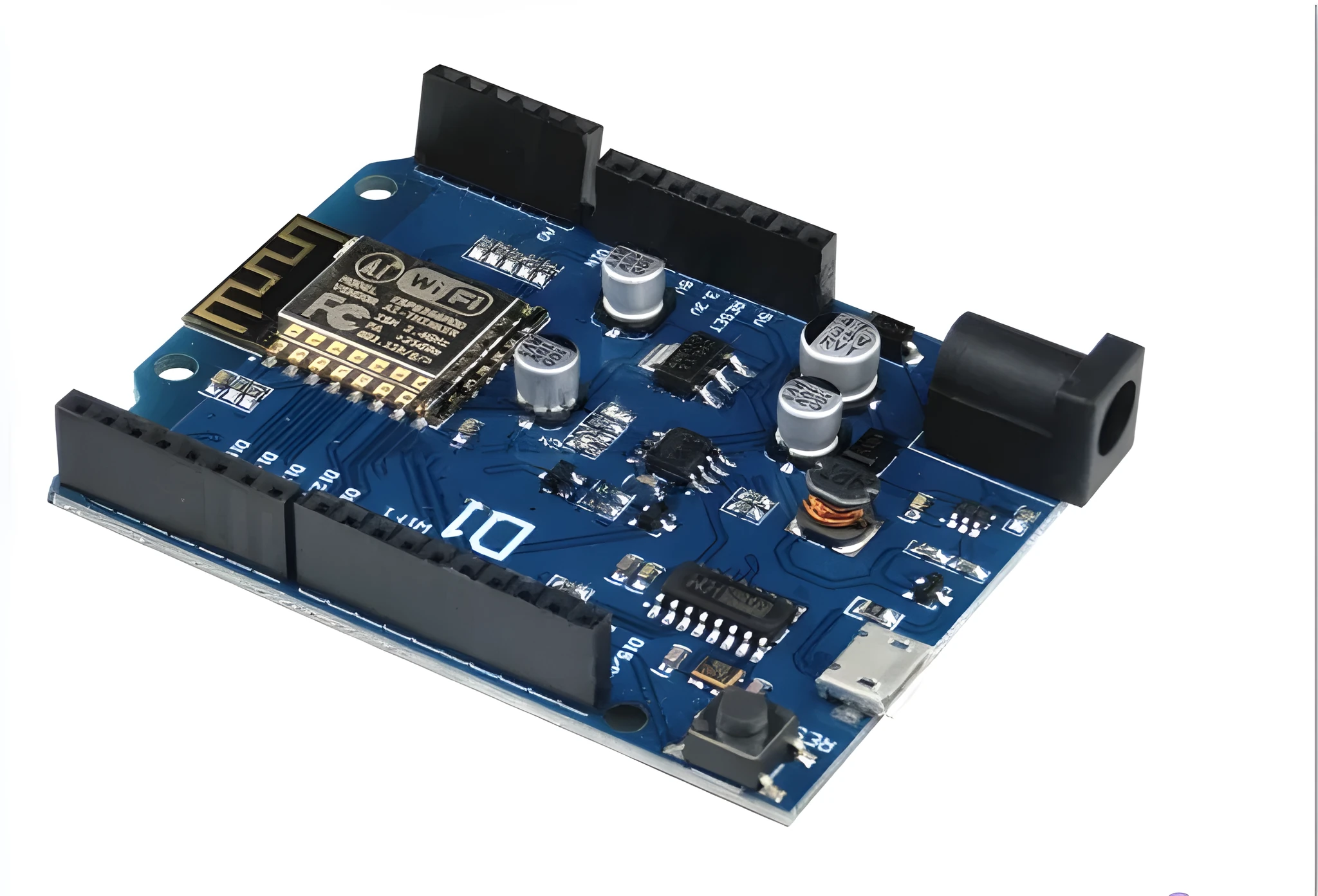
This development board centres on the ESP-8266EX wireless chip, providing a dedicated platform for creating connected projects that require internet access. It bridges the gap between simple microcontroller prototyping and IoT applications by integrating WiFi functionality into a format that works directly with the widely-used Arduino IDE. Once the necessary hardware package is installed, it operates in a familiar manner akin to an Arduino UNO, lowering the barrier for hobbyists and developers moving into wireless systems. The inclusion of an onboard switching power supply rated at 5V and 1A, capable of accepting inputs up to 24V, removes the need for an external regulator in many scenarios, while support for Over-The-Air programming allows for remote updates post-deployment.
Features and Construction

The board's core architecture is defined by the ESP-8266EX chipset, which handles WiFi communication. Its design provides a specific set of hardware interfaces aimed at prototyping and development work within the Arduino ecosystem.
Material and Build
The source material confirms the board is based on the ESP-8266EX integrated circuit but does not detail the printed circuit board substrate, solder mask, or component mounting specifications. The construction includes an onboard switching power supply circuit capable of delivering 5 volts at 1 amp, indicating built-in voltage regulation and conversion from higher input sources. The absence of further material data means performance claims regarding thermal management, signal integrity, or physical robustness cannot be made.
Size and Practical Fit
No physical dimensions, board outline, mounting hole positions, or weight are listed in the provided information. This lack of measurement data means prospective users cannot assess the board's footprint within an enclosure or on a breadboard without consulting external documentation. The pin configuration includes 11 general-purpose digital I/O pins and one dedicated analogue input pin, defining its connectivity scope rather than its physical size.
Uses and Placement
This board is intended for developing devices and prototypes that require wireless network connectivity, leveraging the Arduino software environment for accessibility.
Event or Professional Use
In professional prototyping or event-based installations, the board's OTA wireless update capability allows for post-deployment firmware patches or feature additions without physical access. The wide-input-range power supply (up to 24V) offers flexibility in power sourcing, which can be advantageous in environments with variable power quality or where a single supply needs to serve multiple devices. The 0-3.3V analogue input range suits standard sensor outputs, making it applicable for data acquisition systems in exhibitions, temporary monitoring setups, or product development cycles.
Everyday Home Use
For home automation hobbyists and makers, the primary advantage is the seamless integration with the Arduino IDE, a tool many are already familiar with. This allows for the creation of smart home nodes, weather stations, or network-connected controllers without learning a new programming workflow. The onboard power supply means a simple wall adapter can often power the entire project, reducing wiring complexity for permanent installations like garage door controllers, plant watering systems, or security status indicators.
Benefits and Buying Value
The value of this development board lies in its integration of wireless connectivity, a flexible power system, and a standardised development interface into a single unit.
Reuse and Low Maintenance
The board's design promotes reuse across multiple projects due to its general-purpose I/O pins and standard Arduino compatibility. The OTA functionality significantly reduces maintenance overhead for deployed devices, as bugs can be fixed or features added remotely. The robust power supply design, accepting up to 24V input, offers longevity by providing clean, regulated 5V power to sensitive components, potentially reducing failures related to power issues.
Why Choose This Product
This board is a practical choice for developers seeking an ESP-8266EX platform that works natively with the Arduino IDE, eliminating the need for complex toolchain setup. The combination of a capable onboard power supply and OTA support addresses two common practical hurdles in IoT projects: reliable power distribution and update logistics. It provides a quantified set of interfaces—11 digital I/O and 1 ADC pin with a defined 0-3.3V range—which allows for precise project planning without guesswork about capabilities.